let’s talk

Diagnosis & Treatment

Find answers to commonly asked questions about shoulder conditions and treatments. Our comprehensive shoulder section provides valuable insights and expert advice from Dr. Christelle vs Watt. Explore helpful information to better understand your shoulder health and make informed decisions about your care.

diagnosis

Shoulder Conditions

Shoulder Arthritis

AC Joint Disorders

Shoulder Dislocations

Os Acromiale

Shoulder Fractures

Noises Around the Shoulder

Rotator Cuff Tear

Biceps Disorders

Calcific Tendonitis

Pectoralis Major Rupture

Labral Tear

Frozen Shoulder

treatment 

Shoulder Procedures

ROTATOR CUFF INJURY

In cases where conservative treatments do not provide relief or if the rotator cuff injury is severe, surgery may be recommended. An Arthroscopic repair can repair the torn rotator cuff tendon using sutures or anchors. In more complex cases, open surgery may be performed.

SHOULDER ARTHROSCOPY

Arthroscopy is a minimally invasive surgical procedure involving 2-3 small incisions. It utilizes a small camera to visualize, examine and treat the shoulder joint and surrounding soft tissue. The procedure is performed under anesthesia.

SHOULDER JOINT REPLACEMENT

Arthroscopic procedures can be performed in less severe cases to remove loose fragments, smooth out rough surfaces, or clean the joint. A total- or partial shoulder replacement may be considered with severe joint damage.

before and after 

Surgery

So you are about to have shoulder surgery- please read the following carefully as it will answer a lot of you questions and hopefully settle some nerves! The reason you have the surgery is because there is something mechanically wrong in your shoulder, which cause pain and or loss of power and function. The aim of the surgery is to restore the shoulder joint for you to have a pain free powerful and fully mobile shoulder. Understandably this is not possible in every case as pathologies differ and the quality of the tissue play a role. I do however aim to improve the shoulder joint to the best it can be.

Pre Operative

If you are not sure about what is going to be done to your shoulder please ask!

It is your duty to get pre authorization as you have the contract with the medical aid.
The secretary will assist you in this.

You will get forms to fill in from the anesthetist who will look after you during the
surgery. This is to screen you and make sure that you will be operated on in the best
possible scenario.

IF YOU HAVE ANY INFECTION 10 DAYS BEFORE YOUR SURGERY PLEASE LET US KNOW ASAP AS THIS MIGHT LEAD TO A CANCELLATION OF YOUR SURGERY. IF YOU ARE ON ANY BLOODTHINNING PRODUCTS PLEASE LET THE ANEATHITIST
KNOW.

Don’t eat or drink anything from 24h00 the day before the surgery.

You will be admitted on the day of your surgery and my rooms will give you the exact
time and place.

You will most likely get a pre- med to make you relaxed.

You will go to theatre about 45 minutes before your surgery.

In theatre you will be placed on the theatre bed and the anesthetist will insert an IV-line hereafter you will go to sleep.

Post Operative

You will go to the recovery room where you will spend +/- an hour to fully wake up. When it is safe you will return to the ward. If you had a replacement you would likely be send to the high care for the night to help with pain control.

Shoulder surgery can be painful but it is our job to keep you as pain free as possible please let us know if you have pain.

I will see you after the surgery in the ward to make sure you are comfortable.

The morning after you  surgery you will be seen by an occupational therapist- she will guide you through the do’s and don’ts for the next 3 weeks- how to get dressed, how to shower etc.

You will also be seen by myself and I will explain the procedure done to you.

A post surgery follow up appointment will be made for you – this is usually 3-4 weeks after the surgery unless indicated differently.

You will also be send for post surgery X-rays if needed.

Your arm will be in a sling until the follow up appointment unless I indicate differently.

Before you go home you will also receive pain medication that you can take home.

After your follow up visit you will be referred to physiotherapy to help with
rehabilitation.

Book your consultation with
Dr. Christelle van der Watt today, and take the first step towards a pain-free and functional shoulder.

News & Article

Lorem ipsum dolor sit amet, consectetur adipiscing elit, sed do eiusmod tempor incididunt ut labore et dolore magna aliqua
more about

Shoulder Arthritis

The shoulder is a ball and socket joint. The ball and socket parts are covered with cartilage.

Cartilage does not have nerve endings. This is to allow pain free movement when the bony parts glide with movement. If the cartilage gets damage the bone gets exposed.

The causes of the cartilage wear include trauma, degeneration due to age and bony diseases like rheumatoid arthritis.

Once cartilage is damaged there is, unfortunately, nothing to replace it. The body reacts to this by forming new bone at the edges of the joints called oseophytes. They cause stiffness of the joint and the range of motion decrease.

Bone does have nerve endings and this is why it becomes painful when the cartilage wears off and there is bone-to-bone contact.

The treatment of arthritis would typically be:

    1. Pain control with pain killers and anti-inflammatories.
    2. Physiothearapy
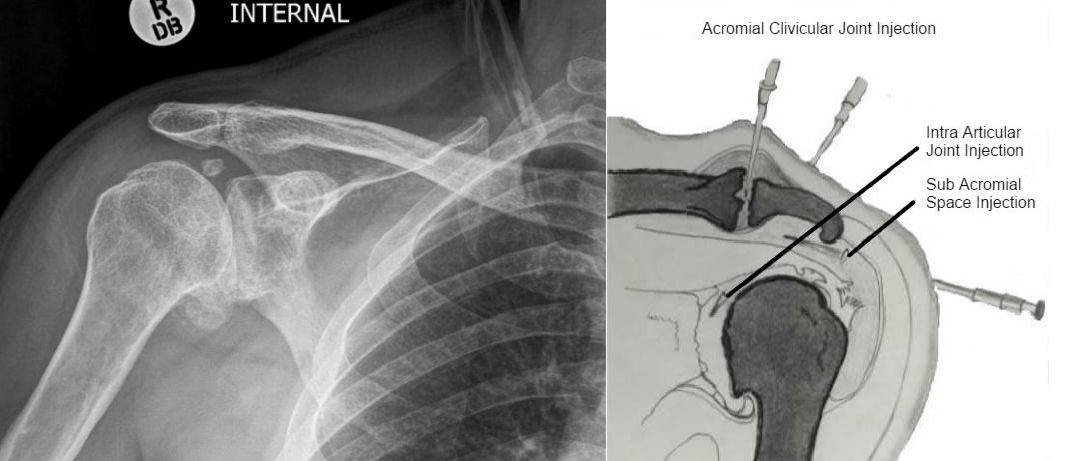
    3. Intra-articular cortisone injections
    4. Injections with Hyaluronic acid- viscosupplementatio
    5. Arthroscopic debridement (washing out of the joint)
    6. Shoulder replacement surgery
  1.  

Shoulder replacement surgery:

There are different types of shoulder replacements.

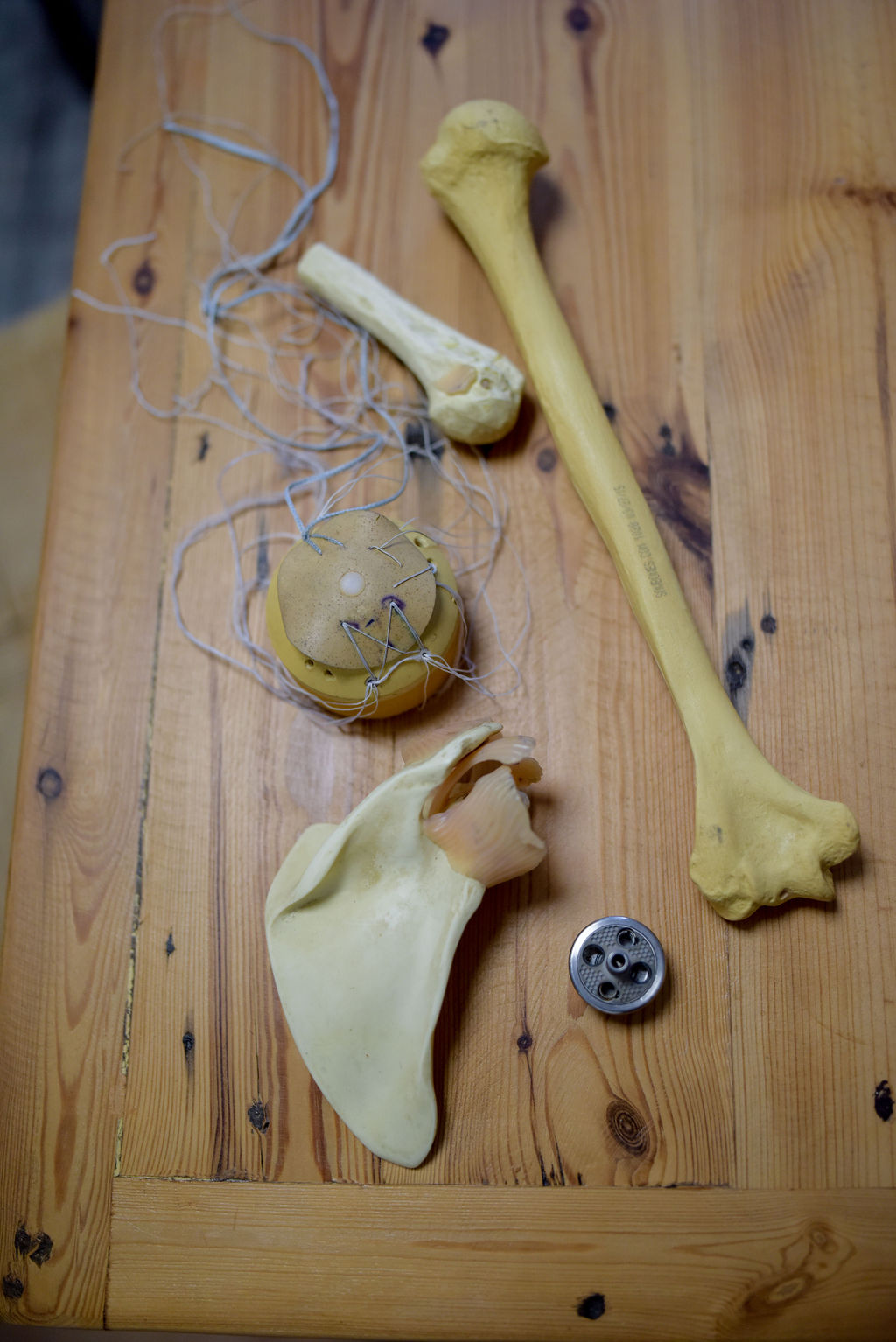
A hemi arthroplasty ( also known as a half a shoulder replacement) is done typically for patients with an intact rotator cuff and wear and tear which affects the ball side of the joint.

This type of replacement has fallen out of favor due to glenoid (socket) erosion. A new type of a hemi replacement with PYRO carbon instead of metal is available in Europe and hopefully soon surgeons in South Africa will be able to use it too.

In a total shoulder replacement or anatomical replacement both the ball and the socket part are replaced. Bone no longer rubs against bone.

This would be the definite treatment for severe arthritis. All the tendons of the rotator cuff should be intact for one to be able to do this type of replacement.

A CT scan will also be done before the operation to judge the bony measurements of the glenoid and if it would be possible to do this type of a replacement.

The next option available is a reverse total shoulder replacement. This type of a replacement puts the ball onto the shoulder blade and the socket part moves to the upper arm.

The deltoid muscle is the only muscle then required to move the shoulder. It is done when the rotator cuff muscles are not functioning or when the bone stock of the glenoid does not allow for an anatomical prosthesis .

The fracture reverse works on the same principal as a reverse prosthesis but is specifically designed for a fracture of the ball part of the joint.

more about

AC Joint Disorders

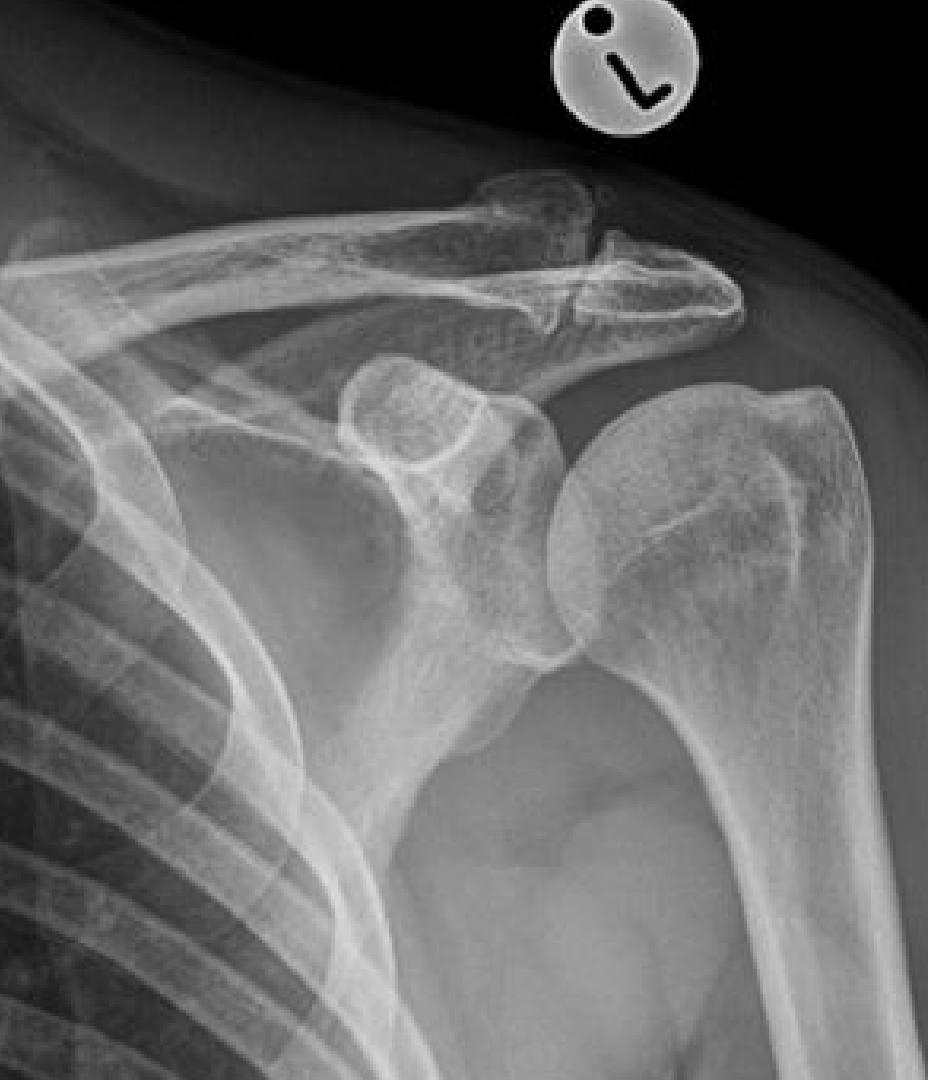
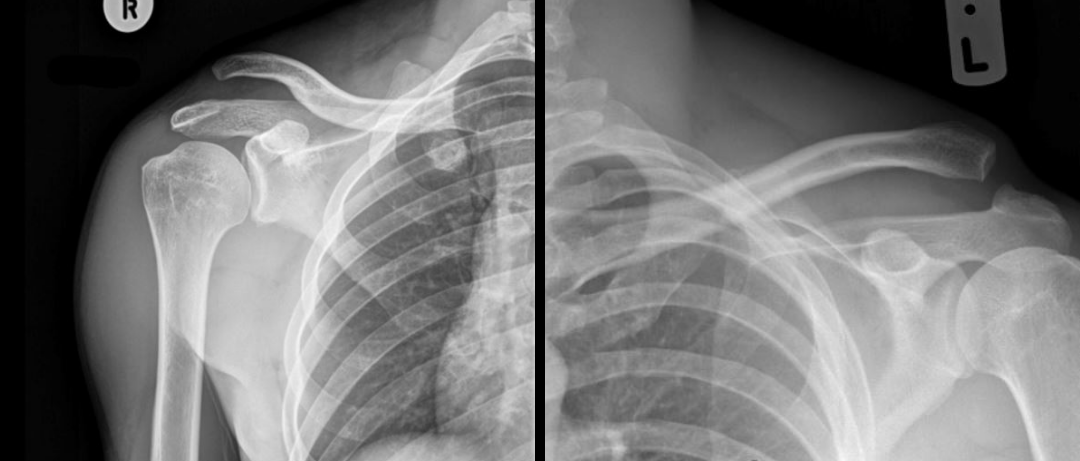
The AC (Acromio-clavicular) joint is where the Clavicle (collarbone) meets the Acromion (shoulder blade).

AC Joint Arthritis

Arthritis is a condition where the cartilage, covering two bones which move in a joint, wears off. This is commonly known as wear and tear.

The clavicle (collarbone) and acromion (flat part of the shoulder blade) has a cartilage washer between them called the meniscus.

This washer can also wear out by, on average, age 40. This causes the two bony ends to rub together, which can cause pain and swelling on top of the shoulder joint.

Treatment options include painkillers and cortisone injections to the AC joint, with physiotherapy to prevent further stiffness and help restore joint mobility.

If this conservative approach is not effective and the pain and stiffness persists, surgery may be required.

The operation performed is called a Mumford procedure and can be done using open or arthroscopic (keyhole) surgery.

AC Joint Dislocations

The AC (acromioclavicular) joint is where the clavicle (collarbone) meets the acromion (shoulder blade).

Given its prominent position at the top of the shoulder, it is prone to being injured in a direct fall onto the tip of the shoulder. Such injuries are commonly seen in rugby players and mountain bike enthusiasts.

The collarbone is displaced upwards and the shoulder blade downwards.

AC joint injuries are classified according to the degree of displacement.
  • Grade 1 – AC joint sprain
  • Grade 2 – AC joint ligaments torn
  • Grade 3 – AC joint 100% dislocated
  • Grade 4 – Collarbone displaced backwards
  • Grade 5 – AC joint 100% dislocated, with a markedly greater degree of separation than Grade 3
  • Grade 6 – Collarbone displaced under coracoid


Treatment depends on the grade of the injury. Grades 1 and 2 AC joint dislocations are typically treated conservatively with painkillers and rest.

Grade 3 injuries may also be treated conservatively, although athletes and manual labourers would benefit from surgery.

Grades 4, 5 and 6 injuries require surgery with a number of options available to stabilise the joint. Your surgeon will discuss these with you.

more about

Shoulder Dislocations

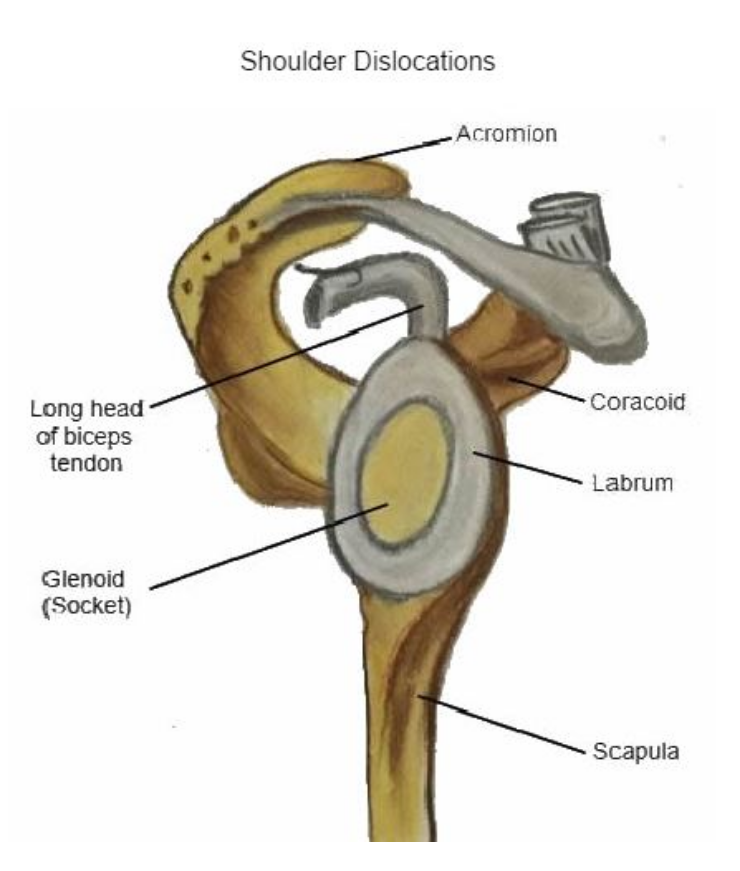
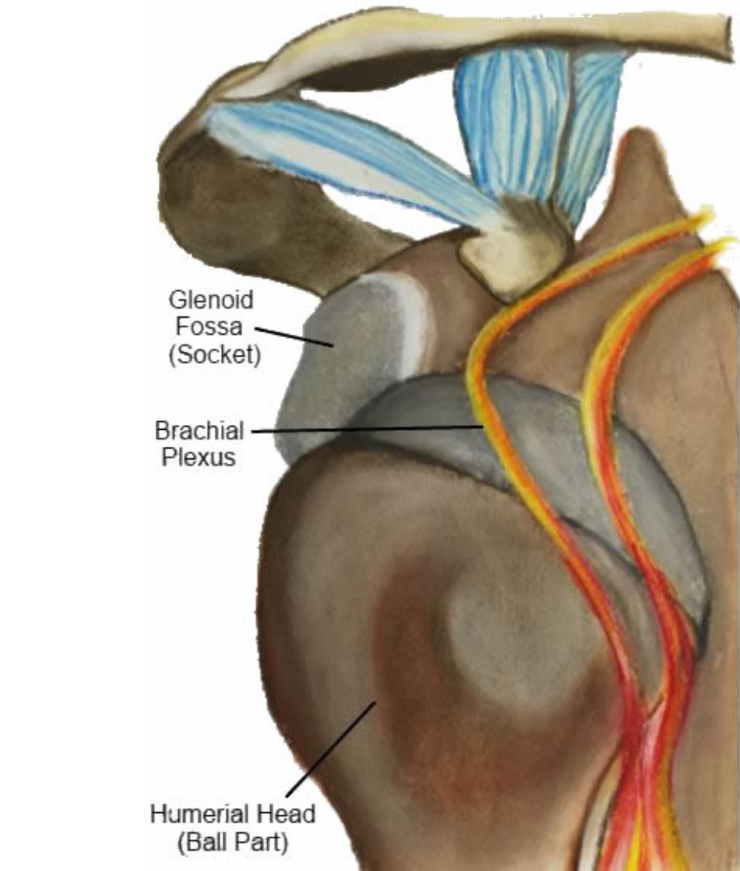
The shoulder has given up stability for mobility. It is the only joint in the body that can turn 360 degrees. Because of this mobility we often see instability, meaning the ball jumps in and out of the socket joint.

The ball is kept stable in the socket due to ligaments around the ball and socket (glenohumeral) and a cartilage rim that deepens the socket joint – called the labrum.

Different types of instabilities occur.

The first one is without any trauma and usually is a multi-directional instability. This is where the ligaments of an individual are more lax and it causes subluxation of the ball and socket joint.

A subluxation is where the joint moves more than it should without popping out completely.

This is usually not painful and physiotherapy is indicated to strengthen the muscles around the shoulder joint.

A dislocation due to trauma is where a big enough force has gone through the shoulder to force the ball out of the socket. The shoulder can dislocate to the back, the front and to the bottom of the joint. Most of the time the patient has to go to an emergency department to have it reduced.

Once the shoulder has dislocated there are certain patterns of damage one can sustain. These are the following:

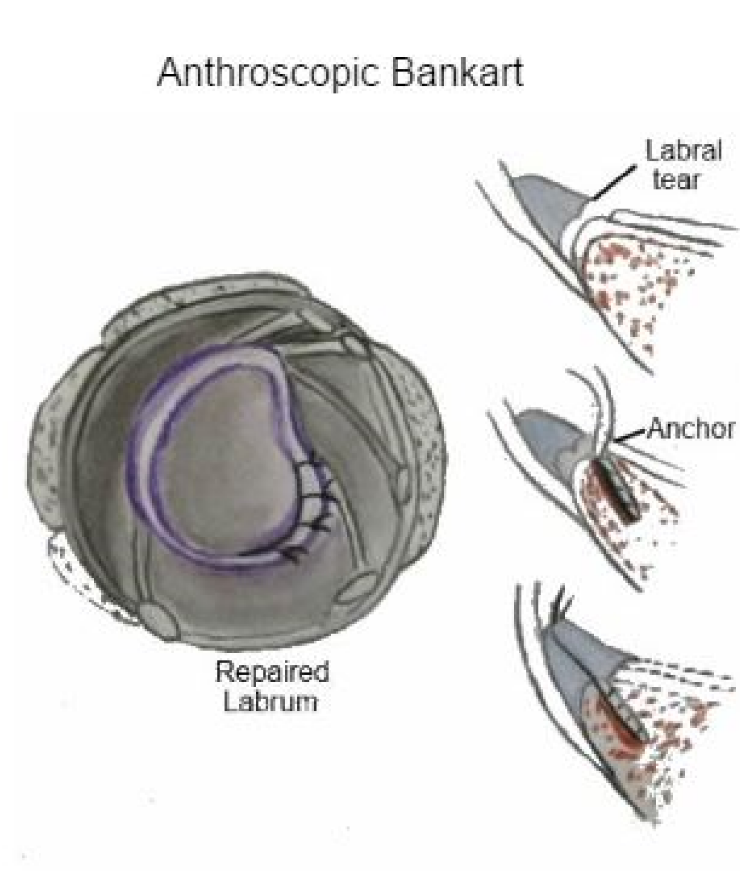
A Bankart lesion is where the labrum (cartilage rim) is torn from the glenoid (socket )

A bony Bankart lesion is where a piece of bone has broken off the glenoid and causes the glenoid to become narrower. The humeral head can then easily slip out of the socket.

A Hill-Sacks lesion is an indentation in the humeral head (ball) where it has slipped over the rim of the glenoid.

Other types of injuries:

ALPSA : anterior labral periosteal sleeve avulsion.

HAGL: Humeral avulsion of the glenohumeral ligament.

The treatment of shoulder dislocations depends on the patient’s profile. In other words the age of the patient, the type of sport he or she does and at what level they participate.

The surgery done to stabilize the joint would be arthroscopic or open surgery. The decision is made by taking in account the patient’s profile and the type of injury the patient has. Your surgeon will discuss this with you.

 
more about

Os Acromiale

The acromion is the bone you can feel on top of the shoulder. It develops as four different parts know as ossification centres.

These centres are supposed to fuse when you stop growing. In some people this does not happen and a cartilage bridge between two bony parts remains.

Often there are no symptoms and the condition is only discovered by chance when an X-ray is done. In some cases, however, this does cause problems.

The os acromiale can cause impingement and a rotator cuff tear. One can also get arthritic changes at the unfused site.

Trauma can cause a previously non-problematic os acromiale to become symptomatic.

Treatment starts with pain killers and physiotherapy. If this does not help, the os acromiale can be surgically fused.

more about

Fractures

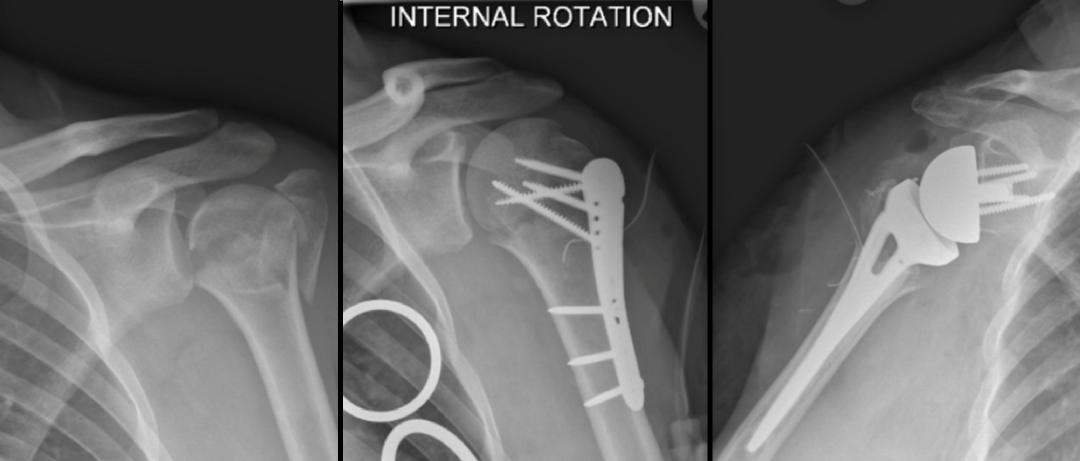
In elderly patients, these type of fractures are usually due to a fall. In younger patients, high energy injuries are more common. Patients present with severe pain and bruising around the shoulder joint, unable to move the shoulder.

Proximal Humeral Fractures

In the casualty department the patient will receive pain medication and will have X-rays taken as well as a CT-scan if the fracture is displaced.

If the fracture is undisplaced, it will be treated conservatively in a sling for six weeks. Regular X-rays will be taken to make sure it did not displace after a couple of days. This can happen due to muscle contraction.

If the fracture is displaced it will need surgery. The type of surgery depends on the age of the patient and the bonestock available for fixation.

The types of surgery is an open reduction and internal fixation with a plate and screws or a fracture prosthesis (a type of shoulder replacement.)

In the older patient, a fracture prosthesis would be more likely due to the quality of the bone, which is usually very soft and screws would tear out.

Physiotherapy will be indicated after surgery as these type of injuries to the shoulder very often results in a stiff joint which takes time to loosen up.

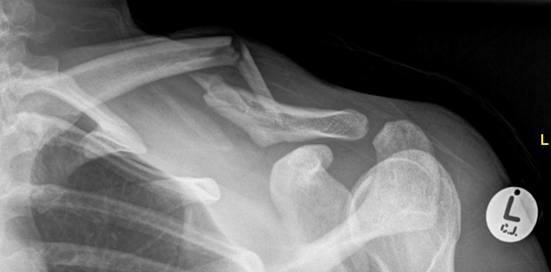
Clavicle Fractures

This type of fracture is often caused by a direct blow to the clavicle (collarbone).

It is a common type of injury. The clavicle links the shoulder to the body and it protects blood vessels and nerves, which runs from the neck to the shoulder and arm.

Clavicle Fractures
 

If the fracture is undisplaced it can be treated in a sling and it can take six to 12 weeks to unite.

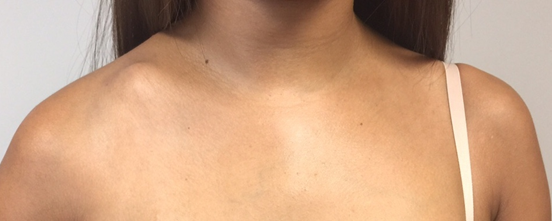
If the clavicle is displaced, threatening the skin, the fracture is open or the clavicle shortened, an operation may be required.

Clavicle Fractures
 

A professional sports person may also opt for an operation to avoid mal union or a non union.

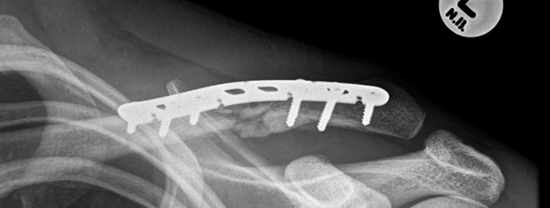
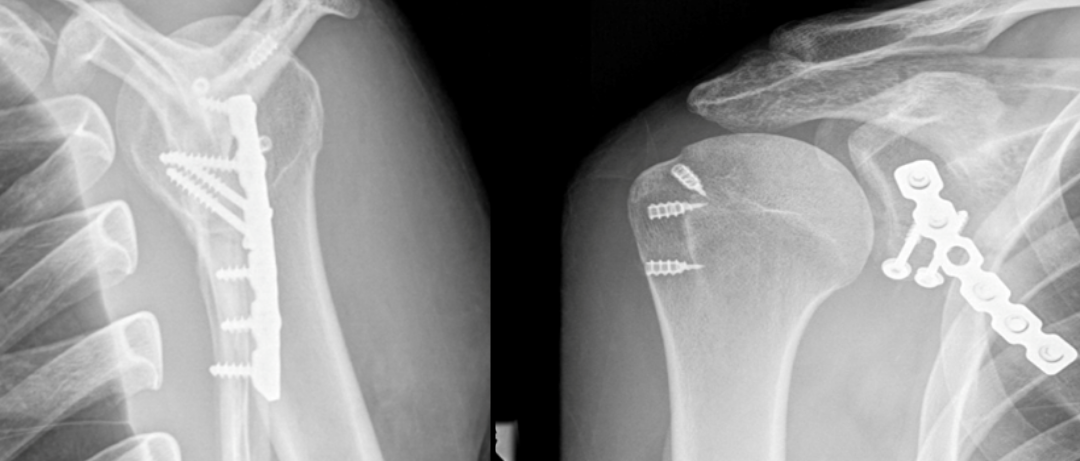
In such cases, the clavicle is fixed with a plate and screws, which align the bony ends, restoring the length of the clavicle.

The advantages of an early fixation include early return to work or activities and less chance of deformity

 clavicle is fixed with a plate and screws

Scapula Fractures

Scapula (shoulder blade) fractures are usually due to high-energy trauma. Other injuries must be excluded like spinal injuries or rib fractures. Fractures involving the glenoid (socket) are classified according to the Ideberg classification. The most important factor is the displacement of the fracture and if there is a step in the articular surface.

Very often a CT scan will be required to evaluate the displacement of the fracture parts to decide on surgery or conservative treatment.

more about

Noises Around The Shoulder

Patients often come to me with concerned about a click or a clunk noise when they move the shoulder. Sometimes the noise has been there for years without any associated mechanical problem.

The acromioclavicular (AC) joint is also often a source of a clicking sound in the shoulder. The patient can hear this when he or she does a push-ups or overhead activities.

If the noise is not accompanied with pain, it’s not something you should be worried about. This is more likely to be soft tissue causing the noise than a pathological process.

If it is painful, be on the safe side and have it checked out by Dr. Christelle vd Watt.

This is especially important if the noise is associated with pain after a traumatic event like a fall or high impact sports. In such cases you should rule out pathology like labral tears and SLAP lesions.

more about

Rotator Cuff Tear

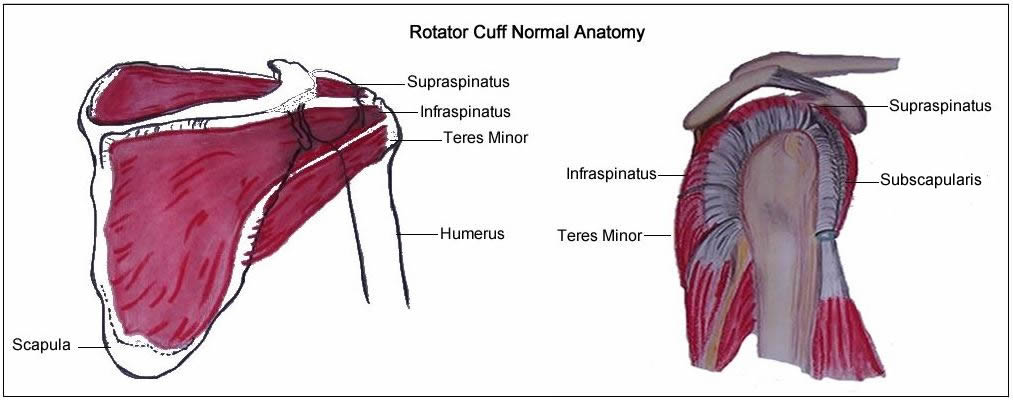
There are four muscles around the shoulder which form the rotator cuff. As the name suggests, the rotator cuff rotates the shoulder joint. They are the supraspinatus, infraspinatus, teres minor and subscapularis muscles.

Each of the four muscles moves the joint in a different direction. If one of the tendons attaching these muscles to bone is torn, you will lose the movement that specific muscle would have provided to the joint.

The rotator cuff muscles also have another important function – to keep the ball centered in the socket of this ball-and-socket joint. If one of them is torn, an imbalance can develop which could lead to rotator cuff arthropathy – a type of arthritis in the shoulder.

Two types of tears are encountered. The first, an acute tear is due to trauma like a fall on an outstretched arm.

The second develops gradually over time and is caused by diminished blood supply in the area where the tendon attaches to the bone. Blood supply to this area gets less with age and smoking can make it worse. The tendons then weaken and can wither away from the bone.

diagnosis

Rotator Cuff Tear

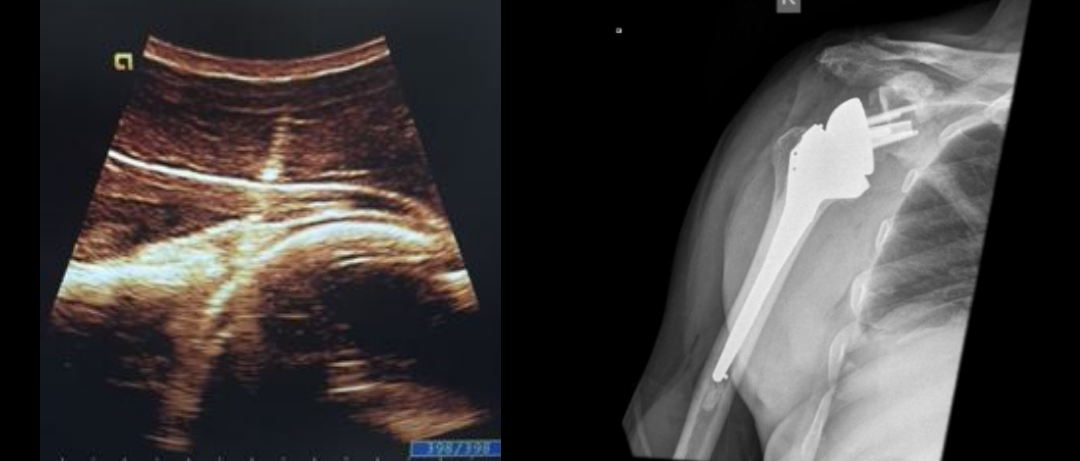
Diagnosing a rotator cuff tear starts with a good patient history and a thorough examination. An ultrasound is a very useful tool to diagnose a tear. If it is unclear on the ultrasound a MRI scan can be requested.

Treatment includes painkillers, anti-inflammatories and physiotherapy.

Cortisone injections may be used once to utilize the anti-inflammatory effect of the cortisone. Repeated injections should be avoided, however, as this might compromise the quality of the tendon.

treatment

Rotator Cuff Repair

Treatment depends on the age of the patient and the type of tear. An acute tear will need surgery to repair. If a tendon tear does not respond to conservative treatment it is best to repair it.

Certain factors may influence the success of a repair. These include the quality of the muscle, the retraction of the tendon, the quality of the tendon and the body mass index (BMI) of the patient.

A complete tear of the rotator cuff will not heal and needs surgery.

There are two types of operations one can do – open surgery or arthroscopic surgery.

In my practice mostly arthroscopic (keyhole) surgery is done. This has the advantage of being less invasive and allows the surgeon to evaluate the whole joint.

Tiny 3-5mm incisions are made and instruments are passed through, including a camera which becomes the ‘eye’ of the surgeon by projecting a picture of everything it sees onto a screen.

A shoulder sling will be worn for three weeks after the operation. An occupational therapist should advise you on how to go about your daily life for this period while your shoulder is protected in a sling.

After three weeks your sling will be taken off and an ultrasound will once again be done to evaluate the repair. The good news is that 90% of rotator cuff repairs are successful.

Once this is confirmed on ultrasound, you will be asked to see a physiotherapist. He or she will then start to mobilize your rotator cuff. This will take place over the next three to nine weeks. It may take up to six months for the shoulder to recover completely.

Complications are rare and may include a failed repair due to poor tissue quality, infection, or post-operative frozen shoulder.

more about

Bicpes Disorders

Biceps Subluxation

This is usually associated with rotator cuff tears.

The biceps, the muscle is in the front of your upper arm, is kept in position by a pulley system. This can get torn with an injury which then causes the biceps tendon to become unstable. This in turn can cause the rotator cuff to tear.

In such cases treatment is a rotator cuff repair (Rotator Cuff Tears) and a biceps tenodesis or tenotomy (Biceps Tendonitis).

Biceps Rupture

The biceps can rupture either at the top where it attaches to the shoulder or at the bottom where it inserts below the elbow on the radius, one of the two bones of the forearm.

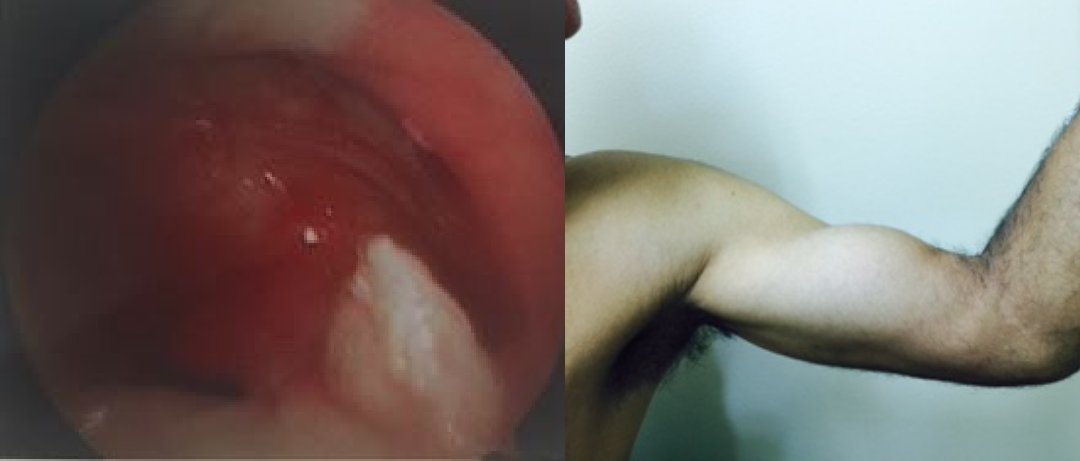
If it ruptures at the top, the patient will have what is known as the Popeye sign. This can happen due to trauma or because of wear and tear. For treatment options see the page on Biceps Tendonitis.

If it ruptures at the bottom, the muscle belly will move upwards and will need surgical repair as it weakens the flexion of the elbow as well as certain movements of the forearm.

This needs to be happen within three weeks before the tendon becomes too retracted to be re-attached.

Biceps Tendonitis

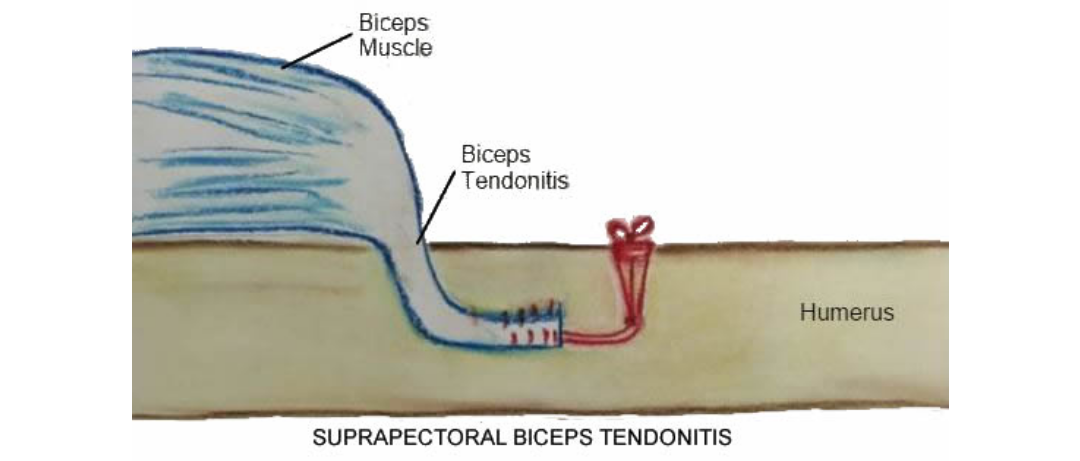
Biceps Tendonitis is an inflammation of the longhead of the biceps, the muscle is in the front of your upper arm. The biceps helps you bend your elbow and rotate your arm. It also helps keep your shoulder stable, which is why biceps tendonitis is considered a shoulder condition.

It can develop on its own or after an injury and can be found with other shoulder joint problems.

It can also be caused by the rubbing of bony prominences in the bicipital groove.

This can be a very painful condition. The pain is usually present in the front of the shoulder. In slim people the tendon can be felt at the front of the shoulder joint and this can cause pain.

Treatment of biceps tendonitis is usually conservative – rest, anti-inflammatories and physiotherapy. Injections – a mix of local anaesthetic and steroids – are also effective. The most accurate and effective way to administer these injections is by using ultrasound guidance.


Advantages of tenodesis are that cosmetically it helps prevent the ‘Popeye’ lesion and in young, active people, the loss of strength that accompanies a tenotomy is eliminated.

Some patients do still have a Popeye lesion or cramping, but much less than with a tenotomy.

Studies that looked at the outcomes of the two operations could not find any difference between the two on the outcome measures used.

If conservative treatment fails, surgery is an option. There are two types of surgeries that can be done.

Tenotomy involves cutting the tendon. Usually this is done in older patients where the so-called Popeye lesion will not be visible. A patient may lose a bit of power in the arm that’s been operated on, but this is not a functional impairment.

A patient may also experience cramps in the biceps muscle, but this usually passes after six to eight weeks.

In biceps tenodesis, the second type of operation, the tendon is cut and then fixed to the bone. This is done during keyhole surgery and is often done with a rotator cuff repair.

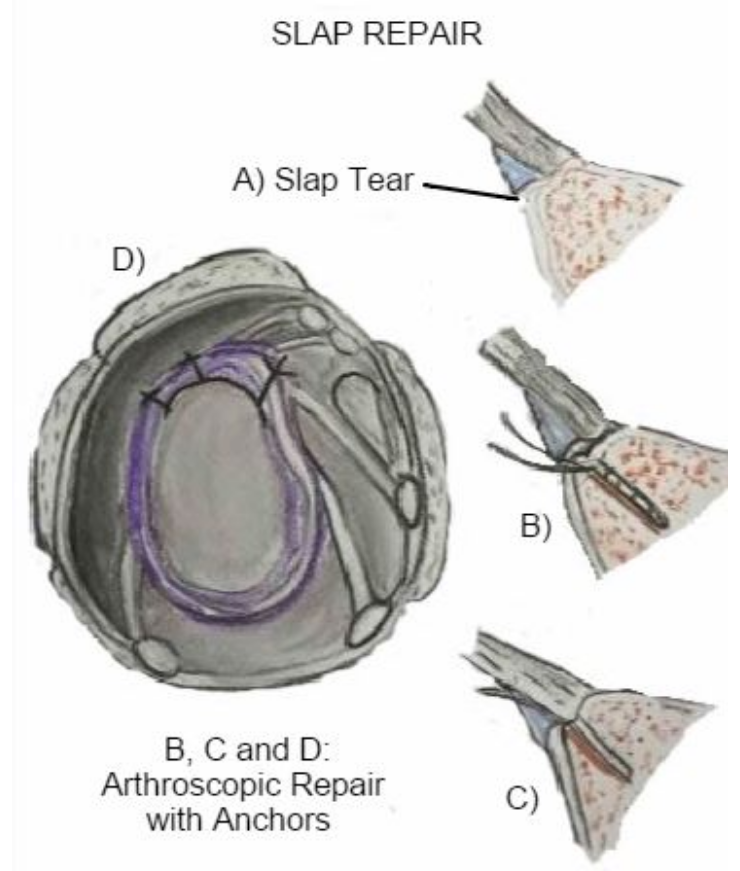
SLAP Lesion

This is a condition where the biceps tendon pulls the labrum from the glenoid (the socket part of joint) from the front to the back.

The labrum is the cartilage rim around the socket which helps keep the ball of the joint in place.

People who do overhead or contact sports are at risk of SLAP lesions.

Symptoms can be pain and a clicking sound.

For more details, including suggested treatments, see the page on Labral Tears.

more about

Calcific Tendonitis

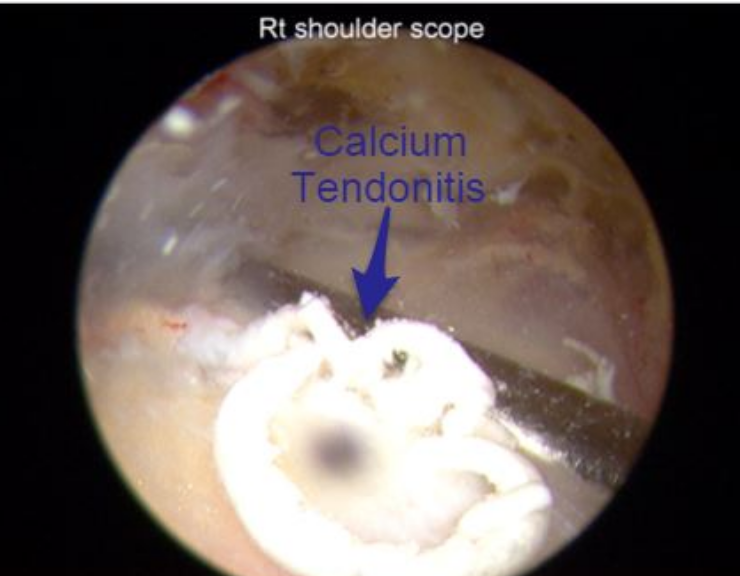
A calcium ‘abscess’ can form in the rotator cuff. This can cause severe pain and ranks with frozen shoulder as one of the most painful shoulder conditions.

The pain is caused by a chemical irritation and the build-up of pressure in the tendon.

Calcific tendonitis has three phases: formative, calcifying and restoration. It is usually in the last two phases that it causes pain.

We do not know why it forms and men and women between the ages of 30 and 60 are commonly affected.

It will clear up on its own, but this can take between eight and 10 years. This is why when patients are in severe pain it can be removed. There are two types of procedures to remove the calcium. The one is a needling procedure which can be done in the consultation room or under concious sedation. This is where needles are placed in the calcium deposit and flushed out with sterile saline solution, under ultrasound guidance. The second procedure is arthroscopic (keyhole surgery) removal. This is a very successful method to clean out the calcium deposit.

30% of patients who has a calcium deposit can develop a frozen shoulder. This makes this a challenging condition to treat.

more about

Pectoralis Major Rupture

The pectoralis major is the muscle one develops when doing a bench press exercise. It moves the shoulder forwards and across the body. It has two parts – the clavicular head and the sternal head which attach to the humerus bone.

The rupture of a pectoralis major is becoming more common due to an increase in power sports with weight training.

This muscle is important in strenuous activities and therefor repair is indicated.

The earlier the surgery is done, the easier it is. If it is left too late the tendon retracts and might become impossible to repair primarily and a tendon graft might be necessary.

more about

Labral Tears

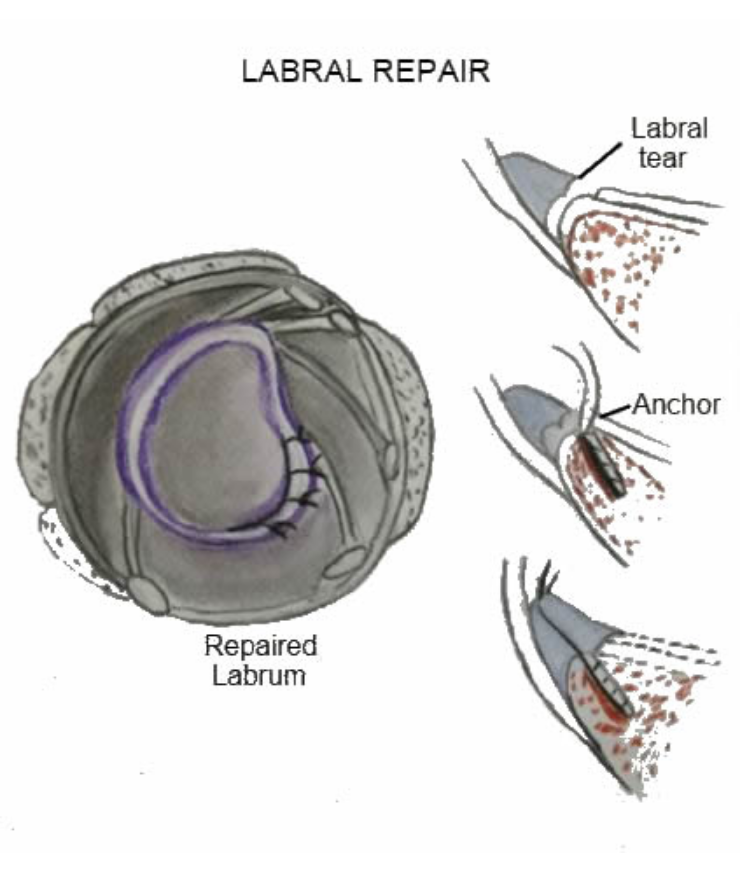
The labrum is cartilage rim around the socket part of the ball and socket joint. Its purpose is to make the socket deeper and to keep the ball from slipping out of the socket.

This makes it very important to the stability of the ball and socket joint.

When the shoulder has dislocated to the front or to the back, a small piece of bone from the socket part may break off. This can cause even more instability and is called a bony Bankart lesion (see Shoulder Dislocations).

If the labrum is torn – usually due to trauma – the shoulder can become unstable.

It can tear in different places. When this happens at the front of the shoulder, it’s called a Bankart lesion (see Shoulder Dislocations). When the tear occurs at the top of the shoulder, it’s called a SLAP Lesion and at the back, a posterior Bankart lesion (see Shoulder Dislocations).

treatment

Labral Tears

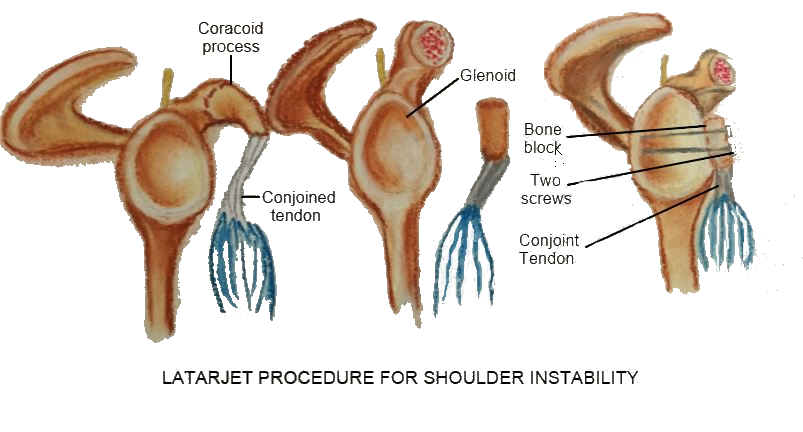
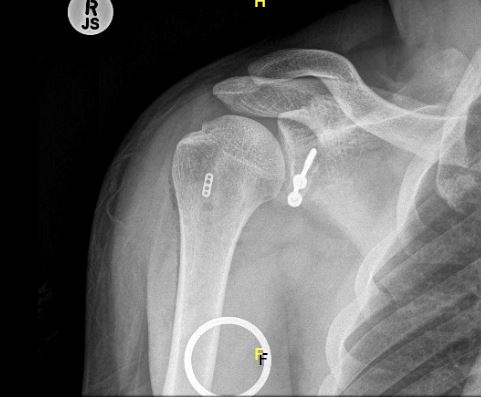
Treatment depends on the age of the patient and their activity level. In young people who play contact sports like rugby, professional sports people or surfers, an arthroscopic (keyhole surgery) repair has been found not to be that successful and an open stabilisation procedure called the Latarjet procedure is the operation of choice.

The younger a patient is, the higher the chance of a re-dislocation.

When older patients dislocate their shoulder, one must always be careful not to miss a Rotator Cuff Tear.

more about

Frozen Shoulder

This is one of the most painful and frustrating conditions of the shoulder, which is the only joint in the body that can ‘freeze up’ in this manner.

We don’t know why this happens. We do know that certain conditions like diabetes, thyroid disease, heart disease and high cholesterol may be associated with a frozen shoulder.

Frozen shoulder may also develop after trauma or surgery to the shoulder.

A frozen shoulder develops in four phases:

  1. Inflammatory – the shoulder becomes painful, seemingly out of the blue. This usually happens between one and three months from the ‘trigger’ condition or trauma.
  2. Freezing – The shoulder remains painful and becomes increasingly stiff. Usually after two to nine months.
  3. Frozen – During this phase the pain lessens, but shoulder is still very stiff. This typically happens after three to nine months.
  4. Thawing – As the name suggests, the stiffness finally clears up.
 

It is important to know that frozen shoulders will resolve themselves on their own, even if no treatment is given. This might take two to four years.

Early diagnosis and appropriate treatment can significantly speed up the healing process as well as lessen the pain and discomfort.

Frozen shoulder is identified using a clinical diagnosis. One of the early signs is a loss of external rotation.

treatment

Frozen Shoulder

Initial treatment is symptomatic: anti-inflammatories and pain medication, as well as cortisone injections into the affected joint once a month for three months running.

Once the pain has subsided, physiotherapy is indicated to treat the stiffness and help regain joint mobility.

In rare cases where the patient is not coping with the stiffness, even after the above treatments, a capsulotomy may be required. This is a keyhole surgery in which the shoulder capsule is released.

After the capsulotomy, early physiotherapy is necessary to maintain the shoulder’s range of motion

more about

Rotator Cuff Surgery

What is the rotator cuff?
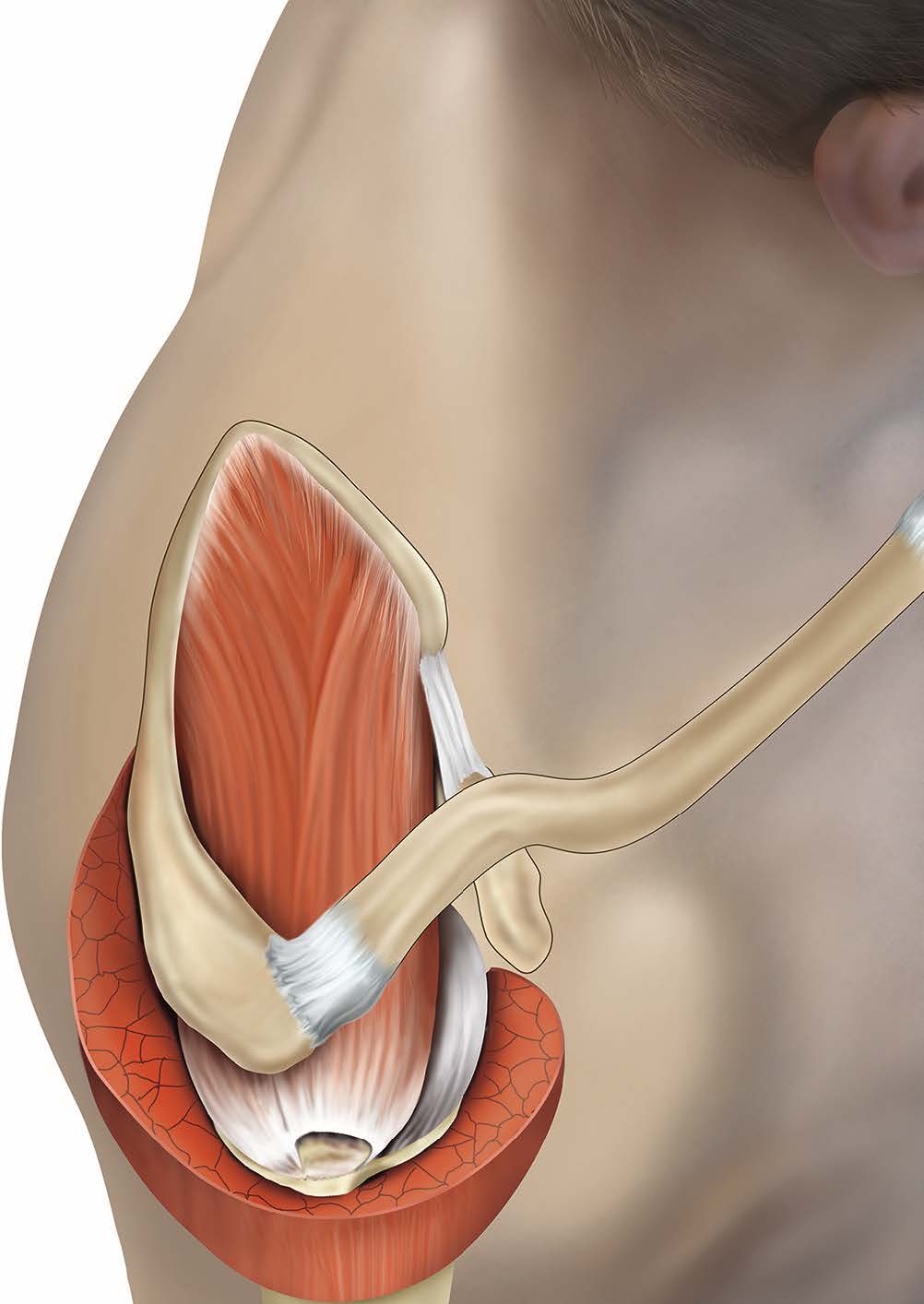
The rotator cuff is formed from four muscles and tendons that attach your arm to the top of your shoulder blade (acromion). The rotator cuff lies just below your collarbone. It is difficult to feel because it is covered by a large muscle. If the rotator cuff becomes weak or tears, you can get pain and weakness.

Acknowledgements Author: Prof Lennard Funk MSc FRCS (Tr. & Orth.) Illustrations: Medical Illustration Copyright © Medical-Artist.com

If Dr. Christelle vd Watt has recommended shoulder surgery, it is your decision to go ahead with the operation or not. 

How do rotator-cuff problems happen?
There are usually two types of damage that can happen to the rotator cuff. 

  1. Rotator Cuff Tear
    This is often caused by a fall or lifting something heavy. You will often feel sudden pain and have weakness in your shoulder straightaway.
  2. Impingement
    The area where the rotator cuff moves is protected by soft tissue called the bursa. The  rotator cuff and the bursa can rub on, or get squeezed by, the collarbone or shoulder blade. Over time this can gradually weaken your shoulder and cause pain when you raise your arm above shoulder height or lie on your shoulder. Impingement (also called painful arc syndrome or supraspinatus tendonitis) can make it easier to damage or tear a tendon.


What are the benefits of surgery? 
You should get less pain and be able to use your shoulder more easily but you are unlikely to get back the same strength that you had before you damaged your shoulder.

Are there any alternatives to surgery?
Most people with impingement or a small tear can get back good function in their shoulder by changing their activities, and with the help of exercises and physiotherapy. It is usually helpful to not hold your arm above shoulder height. Simple painkillers such as paracetamol and anti-inflammatory painkillers such as ibuprofen can also help. A steroid and local-anaesthetic injection into your shoulder can sometimes reduce pain for several months but may cause side effects if repeated too often. All these measures usually become less effective because impingement tends to get worse over time.
If you have a large tear and your shoulder is weak, it is likely that surgery is your only option to get back some strength in your shoulder.

What will happen if I  decide not to have the operation?
Dr. Christelle vd Watt may recommend physiotherapy to  help strengthen any muscles in your shoulder that have not been damaged. Sometimes the symptoms improve with time but if you have symptoms for longer than 9 to 12 months, the problem is likely to continue.

What does the operation involve?
You may need to have an ultrasound scan and MRI scan of your shoulder to find out the type of damage to your rotator cuff. The results of the scan will help your surgeon to plan the operation.

Impingement is usually treated by an arthroscopy (keyhole surgery) which involves making only small cuts and using a small telescope to see inside your shoulder. If you have a tear, you may need to have an operation to repair it. This may be performed using keyhole surgery or by open surgery, which involves a larger cut. The healthcare team will carry out a number of checks to make sure you have the operation you came in for and on the correct side. You can help by confirming to your surgeon and the healthcare team your name and the operation you are having. The operation is usually performed under a general anaesthetic but various anaesthetic techniques are possible. Your anaesthetist will discuss the options with you and recommend the best form of anaesthesia for you. You may also have injections of local anaesthetic to help with the pain after the operation. You may be given antibiotics during the operation to reduce the risk
of infection. The operation usually takes 45 minutes to an
hour.


Keyhole surgery
If possible your surgeon will use keyhole surgery as this is associated with less pain, less scarring and a faster return to normal activities. Your surgeon will make three or four small cuts at the front and back of your shoulder and on the side of your upper arm. They will insert surgical instruments through the cuts along with a telescope so they can see inside your shoulder and perform the operation. Dr. Christelle vd Watt will use the instruments to remove any thickened tissue, release any tight tissue and to shave off some bone so there is more room for your rotator cuff to move. This procedure is called subacromial decompression. Dr. Christelle vd Watt  may also be able to repair rotator-cuff tears using keyhole surgery. 

Open surgery
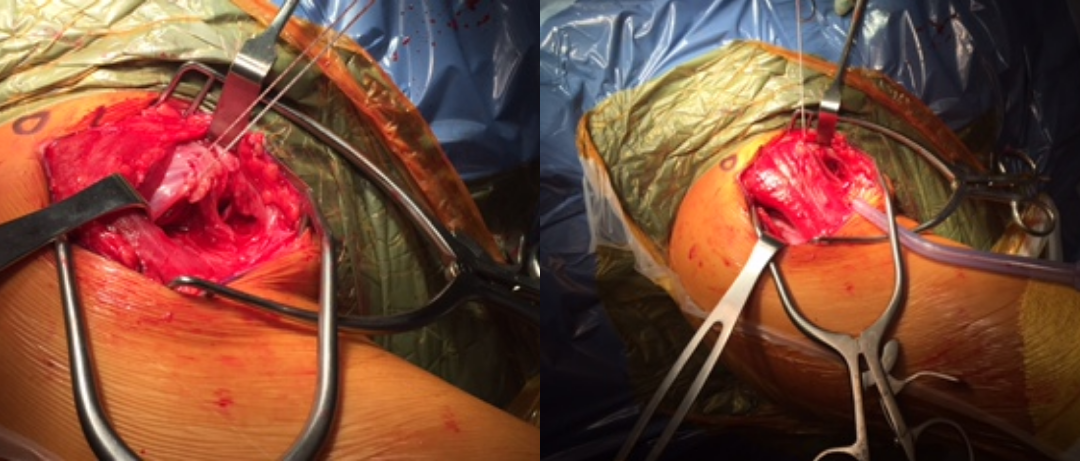
Dr. Christelle vd Watt may use open surgery to repair any tears. They will make a single cut on the front of your shoulder. They will repair the rotator cuff using stitches that anchor into the bone. Your surgeon will close any cuts with stitches or clips.

What should I do about my medication?
Let Dr. Christelle vd Watt know about all the medication you take and follow their advice. This includes all blood-thinning medication as well as herbal and complementary remedies, dietary supplements, and medication you can buy over the counter. 

What can I do to help make the operation a success?
If you smoke, stopping smoking several weeks or more before the operation may reduce your risk of developing complications and will improve your long-term health. Try to maintain a healthy weight. You have a higher risk of developing complications if you are overweight. Regular exercise should help to prepare you for the operation, help you to recover and improve your long-term health. Before you start exercising, ask the healthcare team or your GP for advice. You can reduce your risk of infection in a surgical wound.

  •  In the week before the operation, do not shave or wax the area where a cut is likely to be made.
  • Try to have a bath or shower either the day before or on the day of the operation.
  • Keep warm around the time of the operation. Let the healthcare team know if you feel cold.


What complications can happen?
The healthcare team will try to make the operation as safe as possible but complications can happen. Some of these can be serious and can even cause death. You should ask Dr. Christelle vd Watt if there is anything you do not understand. Any numbers which relate to risk are from studies of people who have had this operation. Dr. Christelle vd Watt may be able to tell you if the risk of a complication is higher or lower for you. 

  1. Complications of anaesthesia- Your anaesthetist will be able to discuss with you the possible complications of having an anaesthetic.
  2. General complications of any operation
  3. Pain. The healthcare team will give you medication to control the pain and it is important that you take it as you are told so you can move about as advised. Bleeding during or after the operation. It is unusual to need a blood transfusion. 
  4. Infection of the surgical site (wound). It is usually safe to shower after two days but you should check with the healthcare team. Keep your wound dry and covered. Let the healthcare team know if you get a high temperature, notice pus in your wound, or if your wound becomes red, sore or painful. An infection usually settles with antibiotics but you may need another operation.
  5. Unsightly scarring of your skin, although arthroscopy scars are usually small and neat.
  6. Specific complications of this operation
    Bleeding into the joint (risk: less than 1 in 100). This can cause swelling and pain.  Infection in your shoulder joint (risk: less than 1 in 100). You will need antibiotics and
    sometimes another operation to clean out the
    joint. Severe pain, stiffness and loss of use of your arm and hand (complex regional pain syndrome). The cause is not known. You may need further treatment including painkillers and physiotherapy. Your arm and hand can take months or years to improve.
  7. Damage to nerves around the joint, leading to weakness, numbness or pain (risk: less than 1 in 100). This usually gets better but may be permanent. 


How soon will I recover?
In hospital
After the operation you will be transferred to the recovery area and then to the ward. Your Dr. Christelle vd Watt, or the physiotherapist will tell you how long you need to keep your arm supported. You should be able to go home the same day. However, your doctor may recommend that you stay a little longer. If you do go home the same day, a responsible adult should take you home in a car or taxi and stay with you for at least 24 hours. Be near a telephone in case of an emergency. If you are worried about anything, in hospital or at home, contact the healthcare team. They should be able to reassure you or identify and treat any complications.

Returning to normal activities

  • Do not drive, operate machinery or do any potentially dangerous activities (this includes cooking) for at least 24 hours and not until you have fully recovered feeling, movement and co-ordination. If you had a general anaesthetic or sedation, you should also not sign legal documents or drink alcohol for at least 24 hours.
  • Keep your wound dry for 4 to 5 days, and use a waterproof dressing when you have a bath or shower. Any stitches are usually removed after one to two weeks. The physiotherapist may give you exercises and advice to help you to recover from the operation.
  • Follow any instructions carefully to improve the chance of getting strength and movement back in your joint.
  • The healthcare team will tell you when you can return to normal activities. Do not play contact sports or lift anything heavy until they have told you that it is safe. It can take up to three months to get back to normal activities. 
  • Regular exercise should help you to return to normal activities as soon as possible. Before you start exercising, ask the healthcare team or your GP for advice.
  • Do not drive until you are confident about controlling your vehicle and always check your insurance policy and with your doctor. If your surgeon repaired a tear in one of your shoulder muscles, do not drive for at least two months. 

The future
9 in 10 people have a major improvement but it takes time for pain to lessen and movement to increase. You may not get back the same strength that you had before you damaged your shoulder. Your shoulder is a complex joint and often symptoms come back with time. You may need another operation.


Summary
Rotator-cuff problems can cause pain and weakness in your shoulder. An operation can help to reduce any pain and to get back some strength in your shoulder. Surgery is usually safe and effective but complications can happen. You need to know about them to help you to make an informed decision about surgery. Knowing about them will also help to detect and treat any problems early. problems affecting the joint, without the need for a large cut on your skin. This may reduce  the amount of pain you feel and speed up your recovery. Surgery is usually safe and effective but complications can happen. You need to know about them to help you to make an informed decision about surgery. Knowing about them will also help to detect and treat any problems early. Keep this information leaflet. Use it to help you if you need to talk to a healthcare professional.

more about

Shoulder Arthroscopy

What is an arthroscopy of your shoulder?
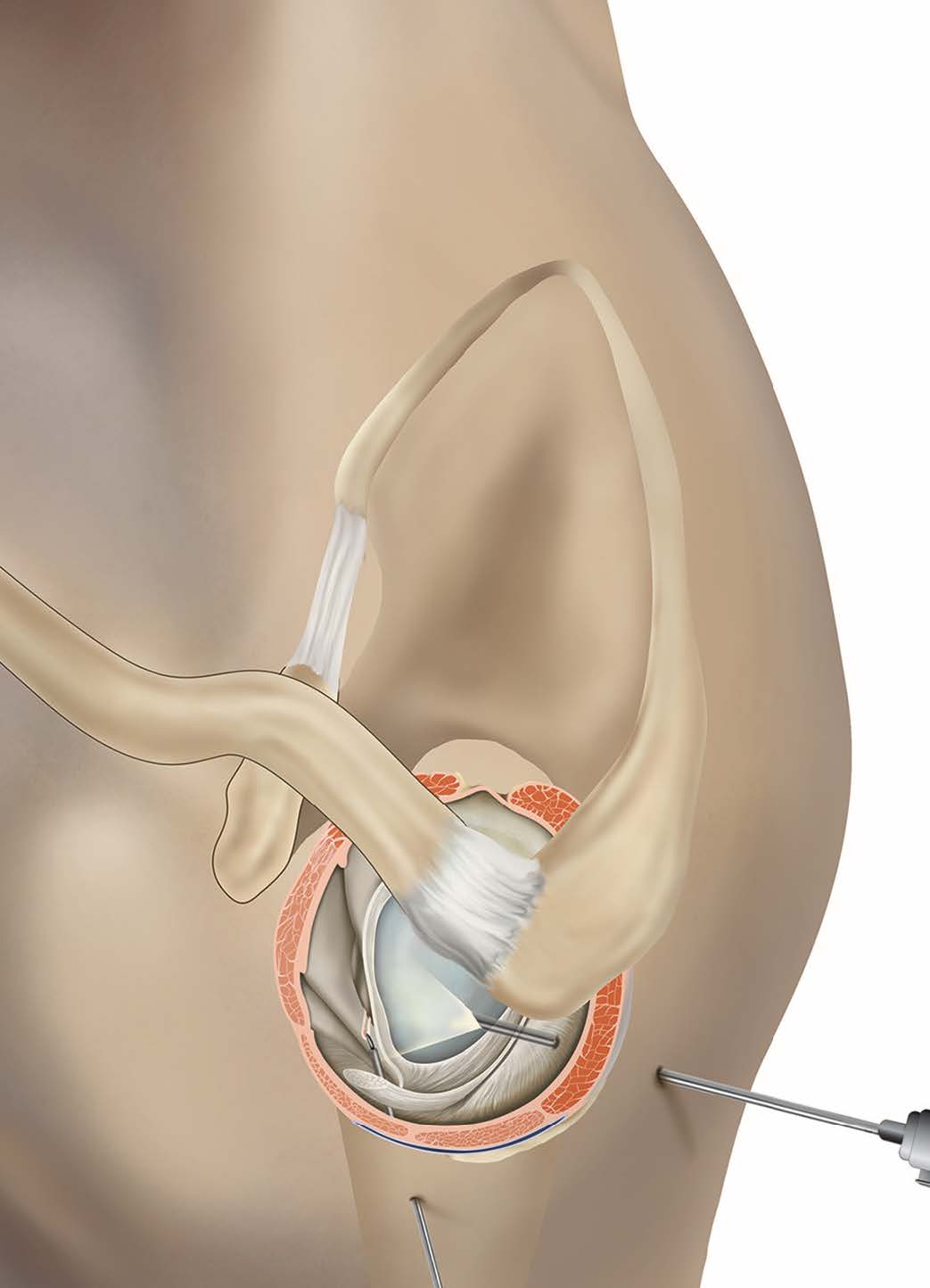
An arthroscopy (keyhole surgery) is performed to diagnose and treat problems in your shoulder joint. It involves examining the inside of the joint using a telescope inserted through small cuts on your skin. Dr. Christelle vd Watt should be able to treat some problems using special surgical instruments, without making a larger cut. Dr. Christelle vd Watt has recommended an arthroscopy of your shoulder. However, it is your decision to go ahead with the operation or not.

Dr. Christelle vd Watt will give you information about the benefits and risks to help you to make an informed decision. If you have any questions that this page does not answer, ask your surgeon or the healthcare team.

What are the benefits of surgery?
The aim is to confirm exactly what the problem is and for many people the problem can be treated at the same time. The benefit of keyhole surgery is less pain afterwards and, for some people, a quicker recovery.

Acknowledgements Author: Prof Lennard Funk MSc FRCS (Tr. & Orth.) Illustrations: Medical Illustration Copyright © Medical-Artist.com

Are there any alternatives to surgery?
Problems inside a joint can often be diagnosed using tests such as CT scans and MRI scans. However, they do not show early damage to the surface of joints, damage to small ligaments or how bad any damage is, and you may then need an arthroscopy to treat the problem. 

What will happen if I decide not to have the operation?
Dr. Christelle vd Watt may not be able to decide on the best treatment for you. If you need an arthroscopy to treat a problem, your symptoms may get worse. Some problems settle on their own or if you change your activities.

What does the operation involve?
Remove any rings from your hand before you come into hospital. The healthcare team will carry out a number of checks to make sure you have the operation you came in for and on the correct side. You can help by confirming to your surgeon and the healthcare team your name and the operation you are having. The operation is usually performed under a general anaesthetic but sometimes a nerve block is used, where local anaesthetics and other painkillers are injected near the major nerves to your arm. Your anaesthetist will discuss the options with you and recommend the best form of anaesthesia for you. You may also have injections of local anaesthetic to help with the pain after the operation. You may be given antibiotics during the operation to reduce the risk of infection. The operation usually takes about 40 minutes. Your surgeon will use a small frame to support your arm. They will inject fluid into the joint, which helps them to perform the operation. Your surgeon will usually make about two to four small cuts, about half a centimetre long, around the joint. They will insert a small telescope through one of the cuts so they can examine the joint. They will insert surgical instruments through the other cuts if they need to treat any problems with the joint (see figure at the top). Your surgeon can clean the area under your shoulder blade and make the area larger, so there is more room for your muscles and tendons to move. This procedure is called subacromial decompression. Dr. Christelle vd Watt may also be able to repair any small tears in the muscles or tendons. Dr. Christelle vd Watt will close any cuts with stitches or adhesive plasters.

What should I do about my medication?
Let Dr. Christelle vd Watt know about all the medication you take and follow their advice. This includes all blood-thinning medication as well as herbal and complementary remedies, dietary supplements, and medication you can buy over the counter. 

What can I do to help make the operation a success?
If you smoke, stopping smoking several weeks or more before the operation may reduce your risk of developing complications and will improve your long-term health. Try to maintain a healthy weight. You have a higher risk of developing complications if you are overweight. Regular exercise should help to prepare you for the operation, help you to recover and improve your long-term health. Before you start exercising, ask the healthcare team or your GP for advice. You can reduce your risk of infection in a surgical wound.

  •  In the week before the operation, do not shave or wax the area where a cut is likely to be made.
  • Try to have a bath or shower either the day before or on the day of the operation.
  • Keep warm around the time of the operation. Let the healthcare team know if you feel cold.


What complications can happen?
The healthcare team will try to make the operation as safe as possible but complications can happen. Some of these can be serious and can even cause death. You should ask Dr. Christelle vd Watt if there is anything you do not understand. Any numbers which relate to risk are from studies of people who have had this operation. Dr. Christelle vd Watt may be able to tell you if the risk of a complication is higher or lower for you. 

  1. Complications of anaesthesia- Your anaesthetist will be able to discuss with you the possible complications of having an anaesthetic.
  2. General complications of any operation
  3. Pain. The healthcare team will give you medication to control the pain and it is important that you take it as you are told so you can move about as advised. Bleeding during or after the operation. It is unusual to need a blood transfusion. 
  4. Infection of the surgical site (wound). It is usually safe to shower after two days but you should check with the healthcare team. Keep your wound dry and covered. Let the healthcare team know if you get a high temperature, notice pus in your wound, or if your wound becomes red, sore or painful. An infection usually settles with antibiotics but you may need another operation.
  5. Unsightly scarring of your skin, although arthroscopy scars are usually small and neat.
  6. Specific complications of this operation
    Bleeding into the joint (risk: less than 1 in 100). This can cause swelling and pain.  Infection in your shoulder joint (risk: less than 1 in 100). You will need antibiotics and
    sometimes another operation to clean out the
    joint. Severe pain, stiffness and loss of use of your arm and hand (complex regional pain syndrome). The cause is not known. You may need further treatment including painkillers and physiotherapy. Your arm and hand can take months or years to improve.
  7. Damage to nerves around the joint, leading to weakness, numbness or pain (risk: less than 1 in 100). This usually gets better but may be permanent. 


How soon will I recover?
In hospital
After the operation you will be transferred to the recovery area and then to the ward. Your Dr. Christelle vd Watt, or the physiotherapist will tell you how long you need to keep your arm supported. You should be able to go home the same day. However, your doctor may recommend that you stay a little longer. If you do go home the same day, a responsible adult should take you home in a car or taxi and stay with you for at least 24 hours. Be near a telephone in case of an emergency. If you are worried about anything, in hospital or at home, contact the healthcare team. They should be able to reassure you or identify and treat any complications.

Returning to normal activities

  • Do not drive, operate machinery or do any potentially dangerous activities (this includes cooking) for at least 24 hours and not until you have fully recovered feeling, movement and co-ordination. If you had a general anaesthetic or sedation, you should also not sign legal documents or drink alcohol for at least 24 hours.
  • Keep your wound dry for 4 to 5 days, and use a waterproof dressing when you have a bath or shower. Any stitches are usually removed after one to two weeks. The physiotherapist may give you exercises and advice to help you to recover from the operation.
  • Follow any instructions carefully to improve the chance of getting strength and movement back in your joint.
  • The healthcare team will tell you when you can return to normal activities. Do not play contact sports or lift anything heavy until they have told you that it is safe. It can take up to three months to get back to normal activities. 
  • Regular exercise should help you to return to normal activities as soon as possible. Before you start exercising, ask the healthcare team or your GP for advice.
  • Do not drive until you are confident about controlling your vehicle and always check your insurance policy and with your doctor. If your surgeon repaired a tear in one of your shoulder muscles, do not drive for at least two months. 


The future
Most people have a major improvement but it takes time for pain to lessen and movement to increase. Symptoms often come back with time. You may need another operation. If Dr. Christelle vd Watt performed the arthroscopy to get precise details of the problem with your joint, the healthcare team will arrange for you to come back to the clinic. Dr. Christelle vd Watt will be able to tell you if you are likely to get further problems with your shoulder or need more surgery in the  future.

Summary
An arthroscopy of your shoulder allows Dr. Christelle vd Watt to diagnose and treat problems affecting the joint, without the need for a large cut on your skin. This may reduce  the amount of pain you feel and speed up your recovery. Surgery is usually safe and effective but complications can happen. You need to know about them to help you to make an informed decision about surgery. Knowing about them will also help to detect and treat any problems early. Keep this information leaflet. Use it to help you if you need to talk to a healthcare professional.

more about

Total Shoulder Replacement

What is arthritis?
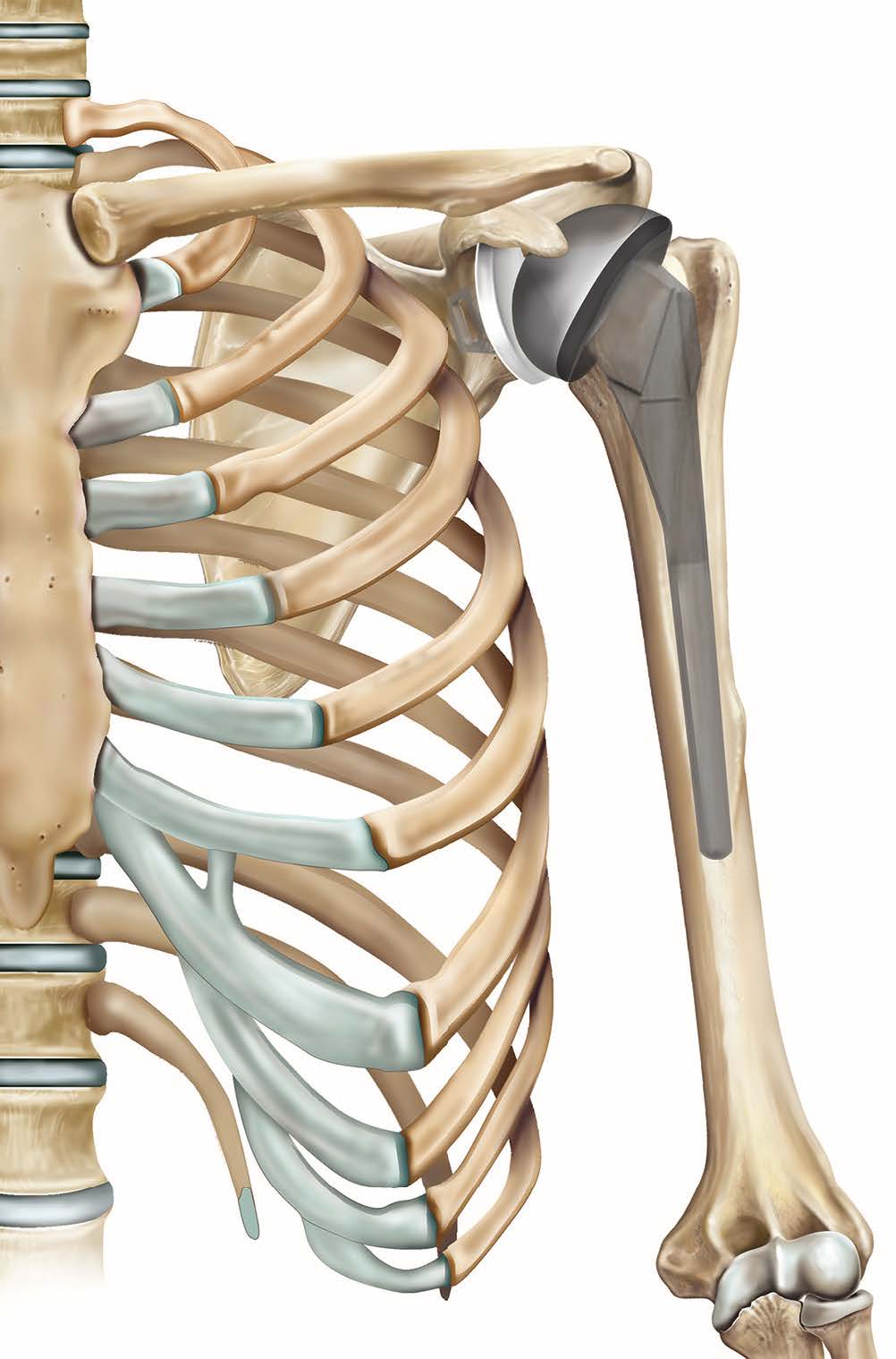
Arthritis is a group of conditions that cause damage to one or more joints. Dr. Christelle vd Watt has  recommended a total shoulder replacement operation (see figure). However, it is your decision to go ahead with the operation or not. This document will give you information about the benefits and risks to help you to make an informed decision. 

Acknowledgements Author: Prof Lennard Funk MSc FRCS (Tr. & Orth.) Illustrations: Medical Illustration Copyright © Medical-Artist.com

How does arthritis happen?
The most common type of arthritis is osteoarthritis, where there is gradual wear and tear of a joint. For a few people this is a result of a previous injury but usually it happens without a known cause. Some other types of arthritis are associated with inflammation of the joints that can eventually lead to severe joint damage. The most common inflammatory arthritis is rheumatoid arthritis. Arthritis eventually wears away the normal cartilage covering the surface of the joint and the
bone underneath becomes damaged. This causes pain and stiffness in the joint, which can
interfere with normal activities.

What are the benefits of  surgery?
You should get less pain and be able to move your arm more easily.

Are there any alternatives to surgery?
Simple painkillers such as paracetamol and anti-inflammatory painkillers such as ibuprofen can help control the pain of arthritis. Regular moderate exercise can help to reduce stiffness in your shoulder. A steroid injection into your shoulder joint can sometimes reduce pain and stiffness for several months. You may get side effects if you have injections too often.
All these measures become less effective if your arthritis gets worse and this is when Dr. Christelle vd Watt  may recommend a shoulder replacement. 


What will happen if I decide not to have the
operation?
Arthritis of your shoulder usually, though not always, gets worse with time. Arthritis is not life-threatening in itself but it can be disabling. Arthritis symptoms can be worse at some times than others, particularly when the weather is cold.

What does the operation involve?
The healthcare team will carry out a number of checks to make sure you have the operation you came in for and on the correct side. You can help by confirming to Dr. Christelle vd Watt, and the healthcare team your name and the operation you are having. Various anaesthetic techniques are possible. Your anaesthetist will discuss the options with you and recommend the best form of anaesthesia for you. You may also have injections of local anaesthetic to help with the pain after the operation. You may be given antibiotics during the operation to reduce the risk
of infection. The operation usually takes an hour to 90 minutes. Dr. Christelle vd Watt will make a cut on the front of your shoulder and remove the damaged ball (head of the humerus). They will examine the socket which lies on your shoulder blade. They will replace the ball and sometimes also the socket. The new ball is made of metal and the socket is usually made of plastic. There are many different types of shoulder replacement available and your surgeon will discuss with you which sort is best for you. Your shoulder replacement is fixed into the bone using a special coating on your arm side of your shoulder joint. Your shoulder-blade side is usually fixed using acrylic cement. Dr. Christelle vd Watt will close your skin with stitches or clips.

What should I do about my medication?
Let Dr. Christelle vd Watt know about all the medication you take and follow their advice. This includes all blood-thinning medication as well as herbal and complementary remedies, dietary supplements, and medication you can buy over the counter. 

What can I do to help make the operation a success?
If you smoke, stopping smoking several weeks or more before the operation may reduce your risk of developing complications and will improve your long-term health. Try to maintain a healthy weight. You have a higher risk of developing complications if you are overweight. Regular exercise should help to prepare you for the operation, help you to recover and improve your long-term health. Before you start exercising, ask the healthcare team or your GP for advice. You can reduce your risk of infection in a surgical wound.

  •  In the week before the operation, do not shave or wax the area where a cut is likely to be made.
  • Try to have a bath or shower either the day before or on the day of the operation.
  • Keep warm around the time of the operation. Let the healthcare team know if you feel cold.

What complications can happen?
The healthcare team will try to make the operation as safe as possible but complications can happen. Some of these can be serious and can even cause death. You should ask Dr. Christelle vd Watt if there is anything you do not understand. Any numbers which relate to risk are from studies of people who have had this operation. Dr. Christelle vd Watt may be able to tell you if the risk of a complication is higher or lower for you. 

Complications of anaesthesia- Your anaesthetist will be able to discuss with you the possible complications of having an anaesthetic.

General complications of any operation

  1. Pain. The healthcare team will give you medication to control the pain and it is important that you take it as you are told so you can move about as advised. Bleeding during or after the operation. It is unusual to need a blood transfusion. 
  2. Infection of the surgical site (wound). It is usually safe to shower after two days but you should check with the healthcare team. Keep your wound dry and covered. Let the healthcare team know if you get a high temperature, notice pus in your wound, or if your wound becomes red, sore or painful. An infection usually settles with antibiotics but you may need another operation.
  3. Unsightly scarring of your skin, although arthroscopy scars are usually small and neat.
  4. Specific complications of this operation
    Bleeding into the joint (risk: less than 1 in 100). This can cause swelling and pain.  Infection in your shoulder joint (risk: less than 1 in 100). You will need antibiotics and
    sometimes another operation to clean out the
    joint. Severe pain, stiffness and loss of use of your arm and hand (complex regional pain syndrome). The cause is not known. You may need further treatment including painkillers and physiotherapy. Your arm and hand can take months or years to improve.
  5. Chest infection. You may need antibiotics and physiotherapy.
  6. Heart attack (where part of the heart muscle dies). A heart attack can sometimes cause death.
  7. Stroke (loss of brain function resulting from an interruption of the blood supply to your brain). A stroke can sometimes cause death.


Specific complications of this operation
– Damage to nerves around your shoulder, leading to weakness, numbness or pain in your shoulder or arm (risk: less than 1 in 100). This usually gets better but may be permanent. 
–Infection, which can result in loosening and failure of your shoulder replacement over a period of a few months (risk: less than 1 in 100). You will usually need one or more further operations to control the infection. 
– Loosening without infection. You may need
another operation to do your shoulder replacement again (risk: 1 in 20 over 8 years).
– Rotator-cuff tears. The rotator cuff is formed from four muscles and tendons that attach your arm to your shoulder blade. You may need surgery to repair any tears.
– Dislocation of your shoulder replacement (risk: less than 1 in 50 in the first 5 years). You may need another operation if it keeps on happening.
–Stiff shoulder. You should get more movement than you had before the operation but
sometimes movement does not improve. It will never feel quite the same as a normal shoulder.

How soon will I recover?
In hospital- After the operation you will be transferred to the recovery area and then to the ward. You will usually have an x-ray to check the position of your shoulder replacement. The physiotherapist will help you to start moving your shoulder, usually after one to two days, and will teach you how to look after your new shoulder.
Keep your wound dry for 4 to 5 days, and use a waterproof dressing when you have a bath or shower. The healthcare team will tell you if you need to have any stitches or clips removed, or dressings changed. You should be able to go home after two to three days. However, Dr. Christelle vd Watt may recommend that you stay a little longer. If you are worried about anything, in hospital or at home, contact the healthcare team. They should be able to reassure you or identify and treat any complications.


Returning to normal activities
You will need to keep your arm in a sling for up to two weeks to keep the tension away from your shoulder joint. The healthcare team will tell you when you can return to normal activities. To reduce the risk of problems, it is important to look after your new shoulder as you are told. Regular exercise should help you to return to normal activities as soon as possible. Before you start exercising, ask the healthcare team or your GP for advice.
Do not drive until you are confident about controlling your vehicle and always check your insurance policy and with your doctor.

The future
Most people make a good recovery, have less pain, and can move about better. It is important to follow the advice the physiotherapist gives you  about exercises to strengthen your shoulder muscles. An  artificial shoulder never feels quite the same as a normal  shoulder and it is important to look after it in the long term.
A shoulder replacement can wear out with time. This depends on how active you are. Eventually a worn shoulder replacement will need to be replaced. About 17 in 20 shoulder replacements will last 15 years.


Summary
Arthritis of your shoulder can cause severe pain, stiffness and disability. A shoulder replacement should reduce your pain and help you to move your shoulder more easily. Surgery is usually safe and effective but complications can happen. You need to know about them to help you to make an informed decision about surgery. Knowing about them will also help to detect and treat any problems early.